Buying a home is one of the biggest financial decisions you’ll make, and in New York (where the housing market can vary dramatically from one community to another) knowing what to expect can make the process much easier.
For Muslim homebuyers, finding the right home may involve even more considerations. You may want to live near a masjid, Islamic school, halal restaurants and grocery stores, or an established Muslim community. You may also be looking for home financing that aligns with your faith and allows you to avoid riba.
New York is home to one of the largest Muslim communities in the United States. According to Pew Research Center’s Religious Landscape Study, approximately 3% of adults in New York identify as Muslim, giving the state one of the country’s largest Muslim populations.
Whether you’re buying your first home, relocating to New York for work or family, or looking for a larger home for your growing family, this guide will help you understand the New York housing market, explore Muslim communities throughout the state, find local masjids and community resources, and learn about programs that may help make homeownership more attainable.
New York Housing Market
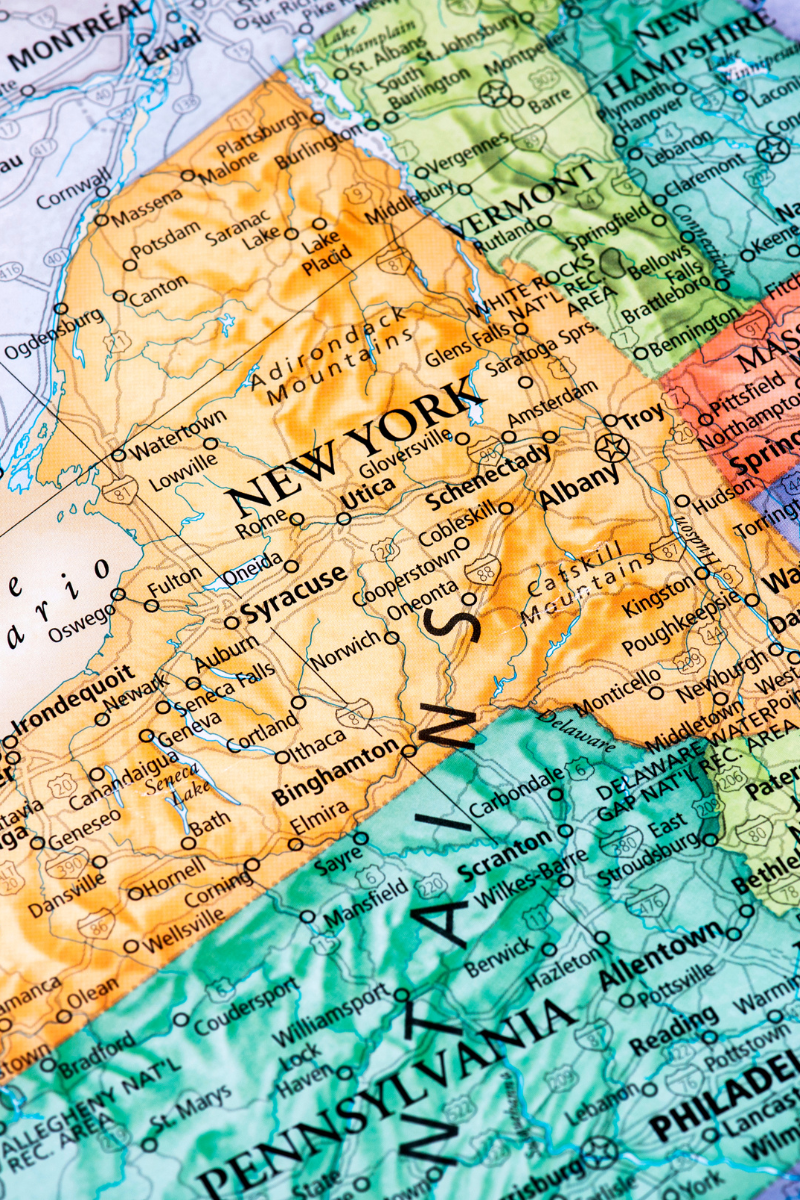
New York is not one single housing market. The experience of buying a home in Manhattan can be completely different from buying a home in Buffalo; a family searching in Long Island will face different prices and property taxes than a family looking in Rochester or Albany.
That’s why it’s important to look at the specific community where you plan to live rather than relying only on statewide averages. As you begin your search, consider:
- Median home prices in the area
- Property taxes
- Homeowners insurance
- School districts
- Commute times
- Access to public transportation
- Nearby masjids and Islamic schools
- Halal restaurants and grocery stores
- Local employment opportunities
- Neighborhood growth and resale potential
The housing market is just as diverse. According to Redfin, median sale price for homes across New York State was approximately $550,000, according to Redfin. But statewide averages can be misleading: the median sale price in New York City is over $800,000.
The takeaway here is not to assume that New York homeownership automatically means buying a million-dollar property. There are many markets throughout the state with significantly different price points, as home prices in New York vary enormously depending on location.
New York City
New York City is one of the country’s most expensive housing markets. Buyers may encounter high prices for both single-family homes and condominiums, while co-ops represent another major component of the city’s housing market.
Long Island
Long Island generally commands higher home prices than many areas upstate, but it also offers established communities, excellent access to New York City, and numerous Muslim communities.
Western New York
Buffalo and surrounding communities generally offer substantially lower home prices than New York City and its suburbs.
Central and Upstate New York
Cities such as Rochester, Syracuse, and Albany can offer additional affordability while still providing access to established Muslim communities.
When determining what you can afford, don’t focus solely on the purchase price. Your total housing expenses may include:
- Your monthly financing payment
- Property taxes
- Homeowners insurance
- Homeowners association or co-op fees, if applicable
- Utilities
- Maintenance and repairs
Where Do Muslims Live in New York?
New York’s Muslim population is incredibly diverse, representing communities from around the world. Below are some of the larger areas of concentration where you can find more people in our community:
Queens
Queens is one of the most diverse areas in New York City and has a particularly large and established Muslim population. Neighborhoods such as Jackson Heights, Jamaica, Richmond Hill, Astoria, and surrounding areas are home to numerous mosques, halal businesses, Islamic organizations, and Muslim-owned businesses. For buyers who want access to a dense urban Muslim community, Queens can be an appealing option.
Brooklyn
Brooklyn is also home to a large and diverse Muslim population. Muslim communities can be found throughout neighborhoods such as Bay Ridge, Midwood, Kensington, and surrounding areas. Bay Ridge in particular is known for its large Arab-American community and numerous halal restaurants, grocery stores, and Islamic institutions.
Long Island
Long Island offers Muslim families a combination of suburban living and access to established Islamic communities. Areas such as Hicksville, Westbury, Hempstead, Plainview, and neighboring communities have significant Muslim populations and numerous Islamic institutions.
Long Island can be particularly attractive for families looking for single-family homes while remaining within reach of New York City.
Westchester County
Westchester County offers suburban communities north of New York City and access to a growing Muslim population. Communities such as Yonkers, New Rochelle, and White Plains provide access to the broader New York metropolitan area while offering a different lifestyle from the city.
Buffalo
Buffalo is home to an established Muslim community and several Islamic organizations. The area’s comparatively lower housing costs can make it an interesting option for buyers who want to live in New York State without facing the housing prices found in the NYC metropolitan area.
Rochester
Rochester has a diverse Muslim community and several Islamic centers serving the region. The city also offers significantly different housing costs from the New York City area, making it worth considering for buyers who aren’t tied to the NYC job market.
Albany
New York’s capital region is home to Muslim families, students, professionals, and several Islamic organizations. Albany can be a good option for buyers looking for a smaller metropolitan environment while remaining connected to the state’s broader Muslim community.
Masjids and Islamic Centers Throughout New York
New York’s large Muslim population means homebuyers have many Islamic institutions to choose from. When researching a neighborhood, consider looking beyond the nearest mosque. Some of the many Islamic institutions serving New York communities include:
- Islamic Center of New York (New York City)
- Islamic Center of Long Island (Westbury)
- Islamic Center of America (New York City)
- Masjid Al-Falah (Queens)
- Islamic Center of Rochester (Rochester)
- Buffalo Muslim Community (Buffalo)
- Islamic Center of the Capital District (Albany)
This is only a sample of the many mosques and Islamic organizations throughout the state. You can find a more comprehensive list of masjids here.
New York First-Time Homebuyer Assistance Programs
One of the biggest challenges facing first-time buyers is saving enough money for a down payment and closing costs. New York offers several programs that may help eligible buyers.
SONYMA Homebuyer Programs
The New York State Housing Finance Agency, commonly known as SONYMA, offers several homeownership programs designed to help eligible New Yorkers purchase a home. Its programs include options such as Achieving the Dream, which is designed to help low- and moderate-income first-time homebuyers.
Eligibility depends on factors including income, location, purchase price, property type, and whether the buyer meets SONYMA’s first-time homebuyer requirements. Current income and purchase-price limits vary by county and household size.
New York State HOME Program
New York State’s HOME program provides funding that can be used by participating organizations to assist eligible homebuyers with down payments and closing costs.
The program generally serves homebuyers at or below 80% of Area Median Income (AMI). Assistance can be used toward the purchase of eligible single-family homes, condominiums, and cooperatives. Current program guidelines allow up to $80,000 per unit for homeownership assistance, although the actual assistance available depends on the participating organization and the individual buyer’s circumstances.
Because this is administered through local participating organizations, availability can vary throughout the state.
New York City HomeFirst Down Payment Assistance
If you’re purchasing a home in one of New York City’s five boroughs, you may also qualify for the HomeFirst Down Payment Assistance Program.
HomeFirst provides eligible first-time homebuyers with up to $100,000 toward a down payment or closing costs on an eligible 1–4 family home, condominium, or cooperative. The program requires buyers to:
- Be first-time homebuyers
- Complete an approved homebuyer education course
- Contribute some of their own funds toward the purchase
- Meet income eligibility requirements
- Purchase an eligible property in one of the five boroughs
- Use the home as their primary residence
- Meet applicable property and purchase-price requirements
The program currently allows household income up to 120% of Area Median Income, with limits based on household size.
NOTE: HomeFirst assistance is structured as a forgivable loan. Depending on the amount and funding source, buyers generally must remain in the property for 10 or 15 years to receive full forgiveness. Please visit their website for more information.
*UIF is not affiliated with any of the above listed or other IL state assistance programs.
How Much Should You Save Before Buying a Home?
A down payment isn’t the only expense you’ll encounter when purchasing a home.
Before you begin shopping, consider saving for:
Down Payment: Your required down payment depends on your financing structure, property type, and financial circumstances.
Closing Costs: Closing costs can include expenses related to title services, legal work, appraisal, inspections, recording, and other services.
Home Inspection: An inspection can identify potential problems before you finalize your purchase.
Earnest Money: Your purchase contract may require an earnest money deposit when your offer is accepted.
Moving Expenses: Budget for movers, furniture, appliances, utility deposits, and other costs associated with moving.
Emergency Savings: Homeownership comes with unexpected expenses. A broken furnace or leaking roof doesn’t wait for a convenient time. Maintaining an emergency fund after closing can help protect your household budget.
Understanding New York Property Taxes
Property taxes are an important consideration for New York homebuyers. Depending on where you purchase, property taxes can have a substantial impact on your total monthly housing costs.
Two homes with similar purchase prices can have dramatically different monthly costs because of differences in property taxes. Before purchasing a home, ask about:
- Current property taxes
- Recent tax history
- School district taxes
- Local tax rates
- Available exemptions
- Whether the property’s assessment may change after purchase
Don’t simply look at the home’s asking price. Calculate the total cost of ownership.
Buying a Home While Staying True to Your Faith
For many Muslims, buying a home isn’t simply a financial decision. It’s also a decision about how to manage money in a way that aligns with Islamic principles. Conventional mortgages generally involve interest, or riba, which many Muslims seek to avoid.
Sharia-compliant home financing offers an alternative approach. For example, UIF’s home financing program uses a Musharaka partnership structure, in which the buyer and UIF share ownership of the property and the buyer gradually acquires UIF’s share. UIF states that its home financing programs are reviewed and approved by its independent Sharia Supervisory Board.
As with any financial product, it’s important to understand the structure you’re entering. When comparing Sharia-compliant home financing options, consider asking:
- How is ownership structured?
- Who owns the property during the financing term?
- How does the buyer acquire additional ownership?
- What happens if the home is sold?
- Are there prepayment penalties?
- Is the program reviewed by an independent Sharia supervisory board?
Understanding these details can help you choose a financing structure that fits both your financial situation and your values.
A Home Is More Than a Financial Investment
Buying a home is about more than purchasing real estate. It’s where your children may grow up. It’s where you’ll invite family and friends for Eid. It’s where you’ll build relationships with your neighbors and become part of a community.
For Muslim families, that can mean finding a neighborhood where you can easily attend the masjid, participate in community events, access Islamic education, and build relationships with other Muslim families.
New York offers an extraordinary range of possibilities.
You could choose an urban neighborhood in Queens or Brooklyn, a suburban community on Long Island, a growing community in Westchester, or a more affordable market in Buffalo, Rochester, or Albany.
The right choice depends on your family’s priorities, budget, work, lifestyle, and community needs. Start by determining what you can comfortably afford. Research the communities that fit your family’s needs. Explore available homebuyer assistance. And most importantly, understand your financing options before you start making offers.
For Muslim homebuyers, the goal isn’t simply to find a house. It’s to find a place where you can build a future, grow your family, become part of a community, and make financial decisions that reflect your faith. And when you’re buying a home in New York with UIF, that means you’re partnering with America’s oldest and most trusted halal home financier.
Share This Story, Choose Your Platform!