Prenups, Divorces, & Family Matters
Muslim families spend considerable time preparing for life’s milestones. Couples plan their weddings, parents work hard to provide for their children, and families save to build a more secure future. But some of the most important decisions are the ones people postpone: How will we manage money as a married couple? What happens to our assets if one of us passes away? Who will care for our children if we’re no longer here to do so? And how can we navigate divorce while protecting our family’s well-being?
These questions can be uncomfortable, but avoiding them doesn’t make them any less important.
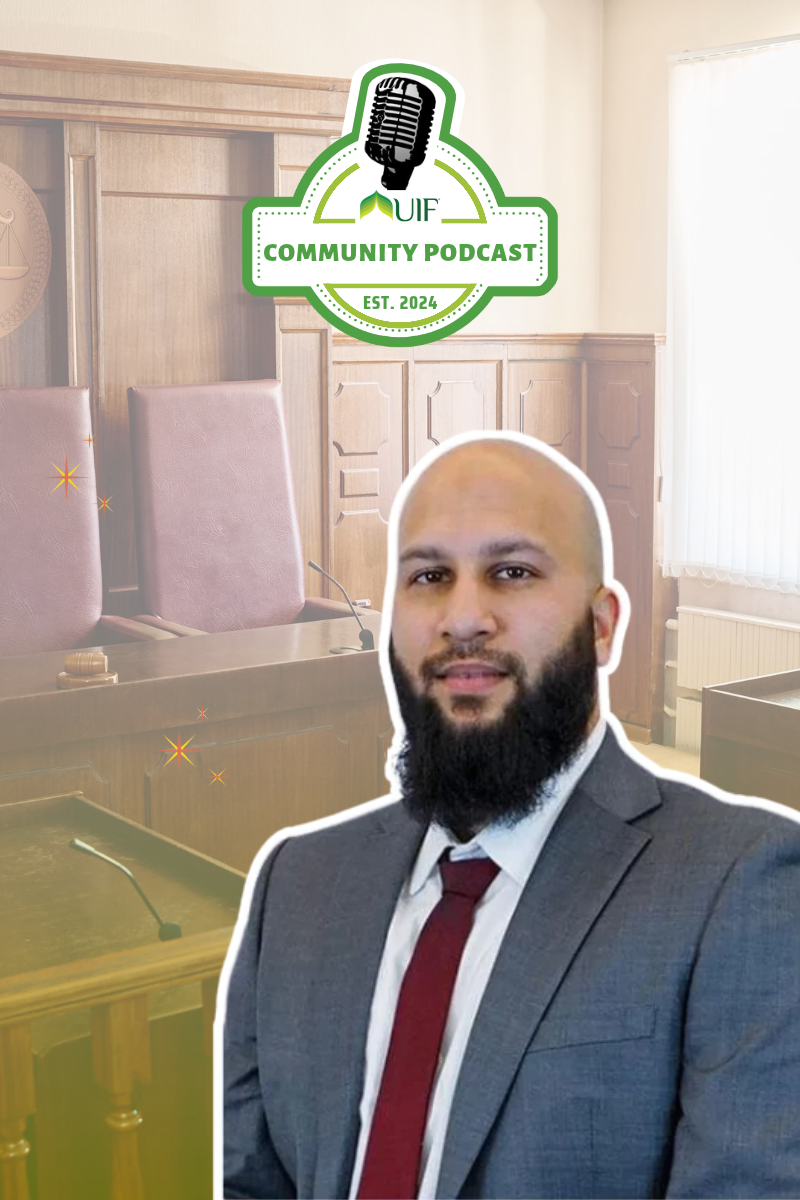
In a recent episode of the UIF Community Podcast, attorney Naveed Husain joined UIF to discuss the legal, financial, and community issues Muslim families often overlook. As a family law and estate-planning attorney, Husain offered practical insights into preparing for marriage, documenting financial agreements, protecting family assets, and approaching difficult transitions with greater clarity.
His message was straightforward: Planning ahead isn’t about expecting the worst. It’s about taking responsibility for the people and relationships that matter most.
1. Rethink the Prenup: Start Marriage With Clear Expectations
For many couples, the word prenup carries a negative connotation. It can sound like planning for divorce before the marriage has even begun.
Husain encourages couples to approach it differently.
A marriage involves rights, responsibilities, financial expectations, and shared decisions. Yet couples often spend more time planning the wedding than discussing how their marriage will work in practice.
A prenuptial agreement can provide a structured opportunity to have those conversations before marriage, when both people can consider their options and make informed decisions.
According to Husain, three areas deserve particular attention:
- Property ownership: What does each person own before marriage, and how will assets acquired during the marriage be treated?
- Mahr: What has the couple agreed to for the marriage contract, and how will that agreement be documented?
- Financial support: What expectations or obligations concerning maintenance might apply during or after marriage, and how can the couple address them appropriately?
These conversations are especially important for Muslim couples because Islamic principles concerning individual property ownership and marital responsibilities may differ from the rules applied under U.S. law.
A nikah contract and a legally enforceable prenuptial agreement are not necessarily the same thing. A religious marriage document may not satisfy the legal requirements that apply to prenuptial agreements in the couple’s state.
Husain emphasized three factors that can help strengthen a prenuptial agreement: full financial disclosure, independent legal representation for both parties, and the absence of coercion.
Rather than treating a prenup as a sign of distrust, couples can view it as an opportunity to clarify expectations, understand one another’s values, and reduce uncertainty about the future.
2. Give Mahr the Thought and Documentation It Deserves
Mahr is an important part of an Islamic marriage contract, but the financial and legal implications of that agreement deserve more attention than they sometimes receive.
As Husain explained, mahr can serve several purposes, including providing financial security to the wife. However, agreeing on an amount is only one part of the process. Couples should also understand the terms of the agreement, document them appropriately, and consider how the obligation may be treated under applicable law.
A common mistake is to treat mahr as a symbolic gesture without thinking through its practical implications.
For example, a couple might agree to a substantial deferred mahr without fully considering when it becomes payable, how the obligation should be documented, or how it might be addressed if the marriage ends.
Husain also encouraged families to think carefully about the financial value of mahr rather than focusing exclusively on the agreed-upon number. Depending on the couple’s circumstances and agreement, they might consider whether assets such as gold or other investments could help preserve or grow its value.
The important distinction is that a religious commitment, a financial obligation, and an enforceable legal agreement are related but not interchangeable.
Couples should work with qualified legal counsel familiar with both their state’s requirements and the Islamic principles relevant to their circumstances. This can help them understand how their marriage agreement may be treated if questions arise later.
3. Talk About Debt Before It Becomes a Source of Stress
Money is more than a matter of income and expenses. It can reveal deeply held beliefs about security, responsibility, generosity, and independence.
That’s one reason financial conversations before marriage are so important.
Husain noted that couples should discuss not only their assets and debts but also their spending habits. Are they natural savers or spenders? How do they feel about borrowing? What financial responsibilities do they have toward their parents or other family members? What are their long-term goals?
Student loans and credit card balances are obvious starting points, but the discussion shouldn’t stop there.
A person may enter marriage with significant debt that legally remains their responsibility. Nevertheless, that debt can affect the couple’s shared financial life, influencing their ability to save, buy a home, support children, or pursue other goals.
Husain also explained that, in the legal system he works within, the timing of when assets are acquired and debts are incurred can be important when determining how they are treated in divorce. However, the rules depend on the jurisdiction and the circumstances. Couples shouldn’t assume that a debt is automatically separate simply because it is in one spouse’s name.
Financial transparency can help couples understand what they’re taking on together, even when certain obligations legally belong to only one person.
Before marriage, consider discussing:
- Current income, savings, investments, and outstanding debts.
- Spending habits and attitudes toward saving.
- Expectations for managing household expenses.
- Financial support for parents or extended family.
- Plans for major purchases, children, and long-term financial security.
- How disagreements about money will be handled.
These discussions can feel awkward at first. But identifying differences early gives couples an opportunity to develop a plan together rather than discovering incompatible expectations under financial pressure.
4. Protect Your Family With an Estate Plan
Estate planning is often associated with retirement or significant wealth. In reality, it matters to families at many stages of life.
Husain highlighted several foundational documents Muslim families should consider preparing.
A will
A will can document your wishes for the distribution of your estate, nominate an executor or personal representative, and address guardianship nominations for minor children. It can also communicate your preferences for funeral and burial arrangements.
A will does not automatically control every asset. Certain jointly owned assets, beneficiary-designated accounts, and assets held in trusts may pass under different rules. That’s why an estate plan should be reviewed as a whole.
A healthcare power of attorney
This document can designate someone to make healthcare decisions on your behalf if you’re unable to make them yourself, subject to applicable law and the document’s terms.
A financial power of attorney
This can authorize a designated person to handle specified financial matters if you become unable to manage them yourself. The scope and effectiveness of the authority depend on how the document is prepared and the law governing it.
Depending on the family’s circumstances, a trust or other estate-planning tools may also be appropriate.
For Muslim families, estate planning often involves an additional consideration: ensuring that their wishes concerning inheritance align with Islamic principles while complying with applicable U.S. law.
Waiting can create unnecessary complications. Without appropriate planning, loved ones may face uncertainty about who should make decisions, how assets should be handled, or who should care for minor children. The process of administering an estate may also become more difficult than it needed to be.
Planning ahead gives families an opportunity to make these decisions thoughtfully instead of leaving them to be resolved during an already difficult time.
5. Make Sure Your Estate Plan Reflects Your Islamic Inheritance Wishes
One of the more complex issues Husain discussed was the relationship between property ownership under U.S. law and the distribution of an estate according to Islamic inheritance principles.
Consider a married couple who owns a home together. They may assume they each own half of the property, but the legal form of ownership can affect what happens when one spouse dies. Depending on how the property is titled, the surviving spouse may receive the property automatically, or the deceased spouse’s interest may be handled through their estate.
That distinction can have significant implications for a family seeking to follow Islamic inheritance principles.
The same issue can arise with retirement accounts, investment accounts, and other assets. Ownership arrangements and beneficiary designations may determine who receives an asset, sometimes independently of what a will says.
Husain encouraged families to think deliberately about ownership rather than assuming that the way an asset is titled automatically reflects their intended arrangement.
Important questions include:
- Who legally owns each major asset?
- Do the ownership arrangements reflect the family’s intentions?
- How will assets be distributed when one spouse dies?
- How can the surviving spouse remain financially secure while the deceased spouse’s inheritance wishes are respected?
- Do beneficiary designations and other arrangements align with the overall estate plan?
Trusts and other planning tools may help families address these questions, depending on the circumstances.
The goal is to create an estate plan that considers both the family’s financial needs and its religious commitments. That requires coordination between qualified estate-planning counsel and, when appropriate, knowledgeable Islamic scholars.
6. Approach Divorce With Clarity, Compassion, and Proper Guidance
Divorce can be emotionally difficult even when both spouses agree that the marriage should end. When misunderstandings about finances, legal rights, or religious obligations enter the picture, the process can become even more complicated.
Husain emphasized that Islamic divorce principles and the U.S. legal process are distinct systems. Understanding one does not automatically resolve the requirements of the other.
For example, a religious divorce and a civil divorce may involve different procedures and consequences. Couples should understand the relevant religious guidance as well as the legal steps required in their jurisdiction.
Misunderstandings about marital property, maintenance, child custody, and financial obligations can intensify conflict. When people are surprised by the legal implications of a divorce, that shock can turn into anger and make an already painful situation more adversarial.
Husain also stressed that divorce itself should not automatically become a reason for a community to take sides. A marriage can end without either family needing to turn the situation into a prolonged conflict.
This is particularly important when children are involved.
Children benefit when parents prioritize their well-being and avoid drawing them into adult disagreements. Family members, friends, and community leaders can help by offering support without spreading gossip, pressuring either spouse, or escalating tensions.
When appropriate, qualified attorneys, counselors, and trusted religious leaders can help couples understand their options and work through the different dimensions of a separation.
Divorce is not always avoidable, and not every marriage should continue. But families can take steps to handle the process with greater dignity, informed decision-making, and consideration for the people affected.
7. Invest in Your Marriage Before a Crisis
One of Husain’s broader observations was that families often prepare young people for careers without giving them comparable preparation for marriage.
Education and professional development are valuable, but a successful marriage also requires communication, self-awareness, emotional maturity, and a willingness to work through differences.
Premarital counseling can create space for conversations that couples might otherwise avoid. It can help them explore their expectations around finances, family relationships, responsibilities, and the kind of life they want to build together.
Husain recommended that couples consider questions such as:
- What did we learn about marriage from our own families?
- How do we each approach money, generosity, and financial responsibility?
- What role will parents and in-laws play in our lives?
- How will we handle disagreements?
- What do we expect from one another as spouses and, potentially, as parents?
These conversations aren’t limited to newlyweds. Husain also pointed out that people and relationships evolve over time. Couples who have been married for decades may find that their circumstances, priorities, and relationship dynamics change as children grow up and leave home.
Continuing to invest in the marriage helps couples adapt to those changes rather than assuming that the relationship will remain the same.
8. Use AI to Learn, Not to Replace Professional Advice
AI tools have made it easier than ever to explore unfamiliar topics, including prenuptial agreements, inheritance, divorce, and estate planning.
Husain sees a role for these tools as a starting point. They can help people learn terminology, understand general concepts, and identify questions to ask a professional.
But he cautioned against relying on AI to draft legal documents or make decisions about a family’s specific circumstances.
Legal requirements vary by state, and the consequences of an incorrect document can be significant. An AI-generated will, trust, or prenuptial agreement may overlook relevant requirements, fail to reflect a person’s actual intentions, or contain inaccurate legal information.
The same caution applies to using AI-generated legal filings without understanding their contents. A document that sounds authoritative is not necessarily accurate or appropriate for the situation.
Husain’s analogy was simple: people shouldn’t attempt to replace specialized professional care simply because information is available online. The same principle applies when protecting a family’s wealth and legal interests.
Use AI to become better informed, organize your questions, and prepare for a conversation with an attorney. For decisions that affect your marriage, children, assets, or estate, seek qualified professional guidance.
Building Stronger Families and Communities Starts With Preparation
The issues discussed in the UIF Community Podcast extend beyond paperwork. They touch on how Muslim families approach responsibility, relationships, financial security, and their obligations to future generations.
A prenuptial agreement can encourage honest conversations before marriage. An estate plan can help protect children and preserve a family’s wishes. Thoughtful financial planning can reduce uncertainty, while a compassionate approach to divorce can help prevent a difficult transition from becoming a wider community conflict.
None of these steps guarantees that life will unfold as planned. But they can help families make informed decisions and prepare for circumstances they may not have anticipated.
Husain’s advice to young couples was to pursue premarital counseling, continue working on themselves, and consider a prenuptial agreement that clearly addresses important expectations and responsibilities.
The broader lesson applies to families at every stage of life: don’t wait for a major life event to begin having important conversations.
Protecting your family’s future starts with the decisions you make today.
This article is for educational purposes only and is not legal, tax, or financial advice. Laws governing marriage agreements, marital property, divorce, and estate planning vary by state and individual circumstances. Consult qualified professionals for advice about your situation.
Share This Story, Choose Your Platform!